
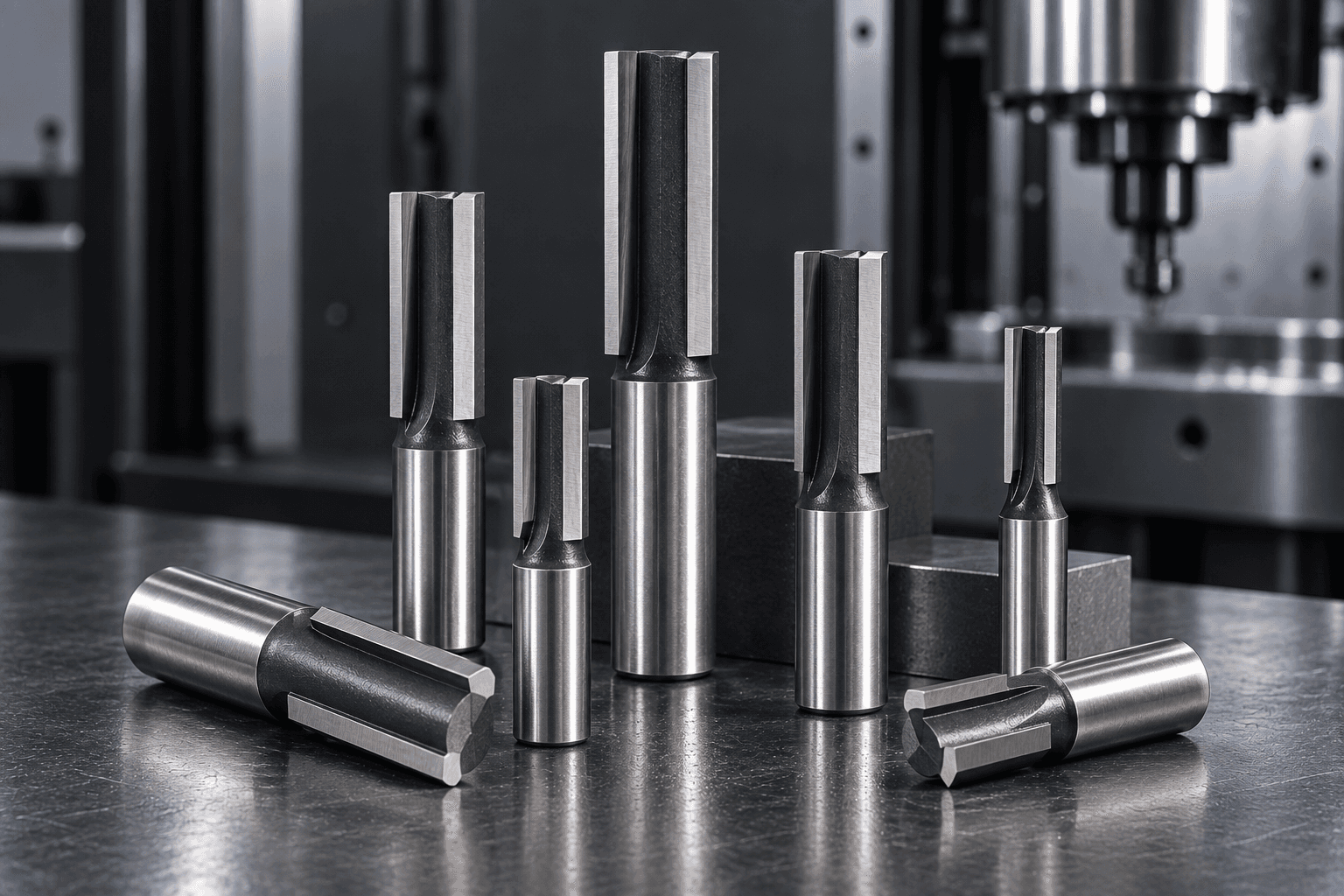
Define the groove or pocket
Provide the required width, depth and bottom form, plus any finish requirements or adjacent features that restrict access. State whether the material is solid wood, plywood, MDF or a faced panel. Identify a through-cut, an edge-entry operation or a pocket entered from above, since these are different selection requirements.
Check bottom-cutting capability
Do not infer plunge capability merely from the term straight bit. Confirm the exact cutter's end-cutting design and permitted applications in its technical information. Include the diameter, cutting length, overall length and shank size separately, along with the existing holder or collet designation and the machine on which it will be used.
Keep straight and spiral designs distinct
A straight-flute cutter, an upcut spiral and a compression cutter are not identical choices simply because they share dimensions. Describe which surfaces need a finished edge and how the operation is arranged. The source product specification and reviewed machine setup should determine any change; the category does not promise a particular finish or cutting rate.
Questions about your requirement
Can every straight router bit plunge into a pocket?
No. Check the manufacturer's documented bottom-cutting or plunge capability for the exact tool before specifying that operation.
Is shank diameter the same as cutting diameter?
Not necessarily. Quote both dimensions and the cutting length. The shank must match the specified holder or collet, while the cutter diameter relates to the feature being machined.
Discuss a part or application
Send the full manufacturer part number or available specification, quantity and machine context. Identification, suitability and supply terms are assessed for the specific enquiry.
Send a tooling enquiry