
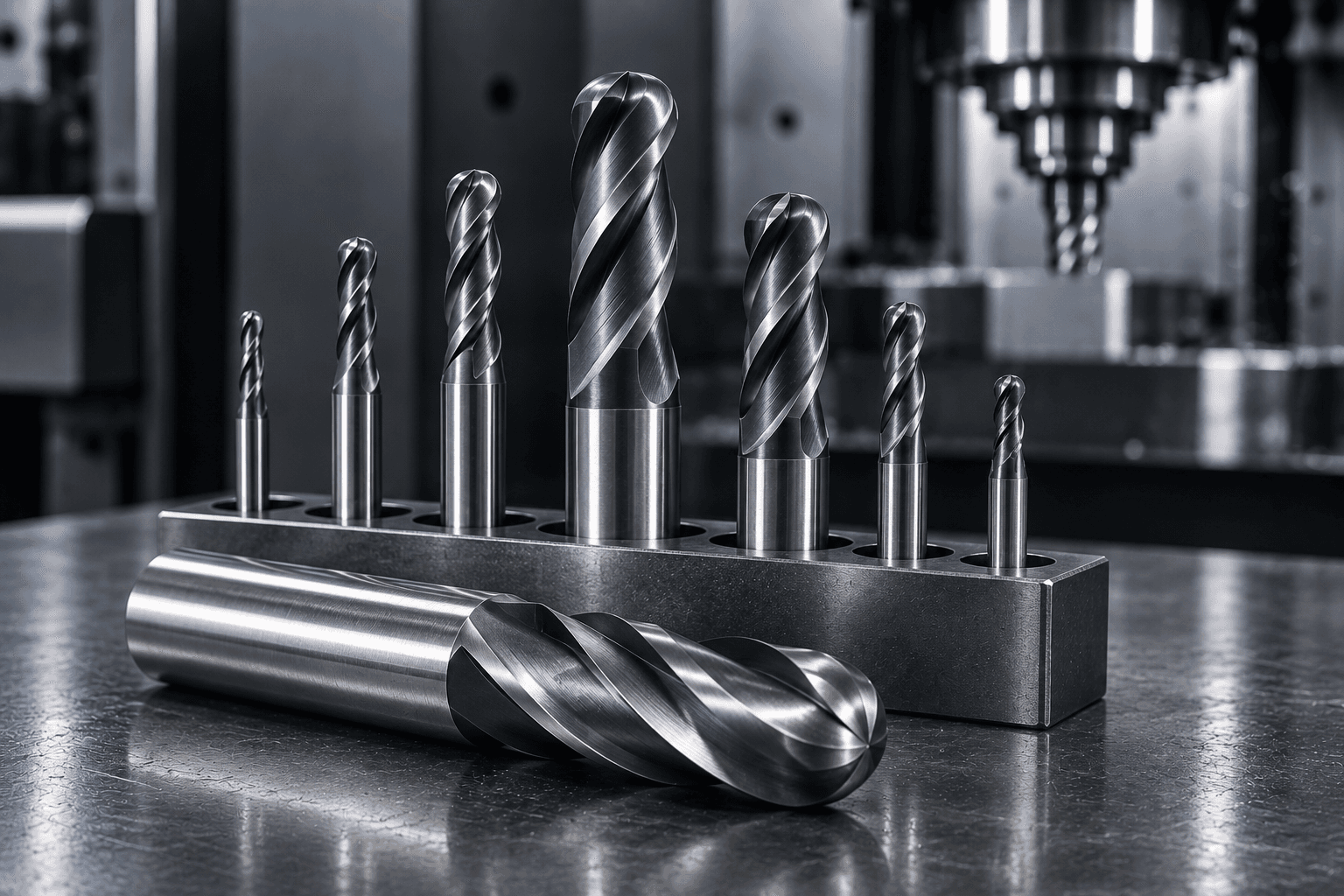
Confirm the profile rather than the name alone
Record the nominal ball diameter or radius as specified by the manufacturer, flute count, cutting length and shank. If the cutter is tapered or has a reduced neck, include those dimensions too. Terms such as ball nose and bull nose should not be treated as interchangeable when identifying the cutting-end shape.
Describe the surface and available access
Provide the workpiece material, local feature radii and required finish from the drawing or model. Identify any deep cavity, narrow access or adjacent wall that constrains the tool assembly. Send the existing cutter code for repeat work, together with relevant holder and projection details if a different reach is being considered.
Keep finishing requirements application-specific
The finished result depends on more than the nominal ball size. State the intended contouring operation and documented acceptance criteria rather than requesting a guaranteed finish from a category alone. The selected cutter's technical data and the reviewed machine setup should inform programming and cutting parameters; this page does not prescribe a universal finishing strategy.
Questions about your requirement
Is a ball nose cutter the same as a corner-radius end mill?
No. A ball nose has a fully rounded end; a corner-radius end mill retains a flat end with rounded corners. Identify the actual profile needed by the component.
Can I select a ball nose end mill by diameter alone?
No. Material suitability, cutting length, neck or taper geometry and holder access must also be checked. Include the surface requirement and the existing tool specification where available.
Discuss a part or application
Send the full manufacturer part number or available specification, quantity and machine context. Identification, suitability and supply terms are assessed for the specific enquiry.
Send a tooling enquiry