
Define the groove profile and tolerance
Specify the groove width, depth, bottom form and any corner radius. Identify its position on the component and whether entry is possible from the side or an open end. Include the material and relevant dimensional tolerances, especially where the groove locates another part or must follow a particular drawing standard.
Identify the cutter and its mounting
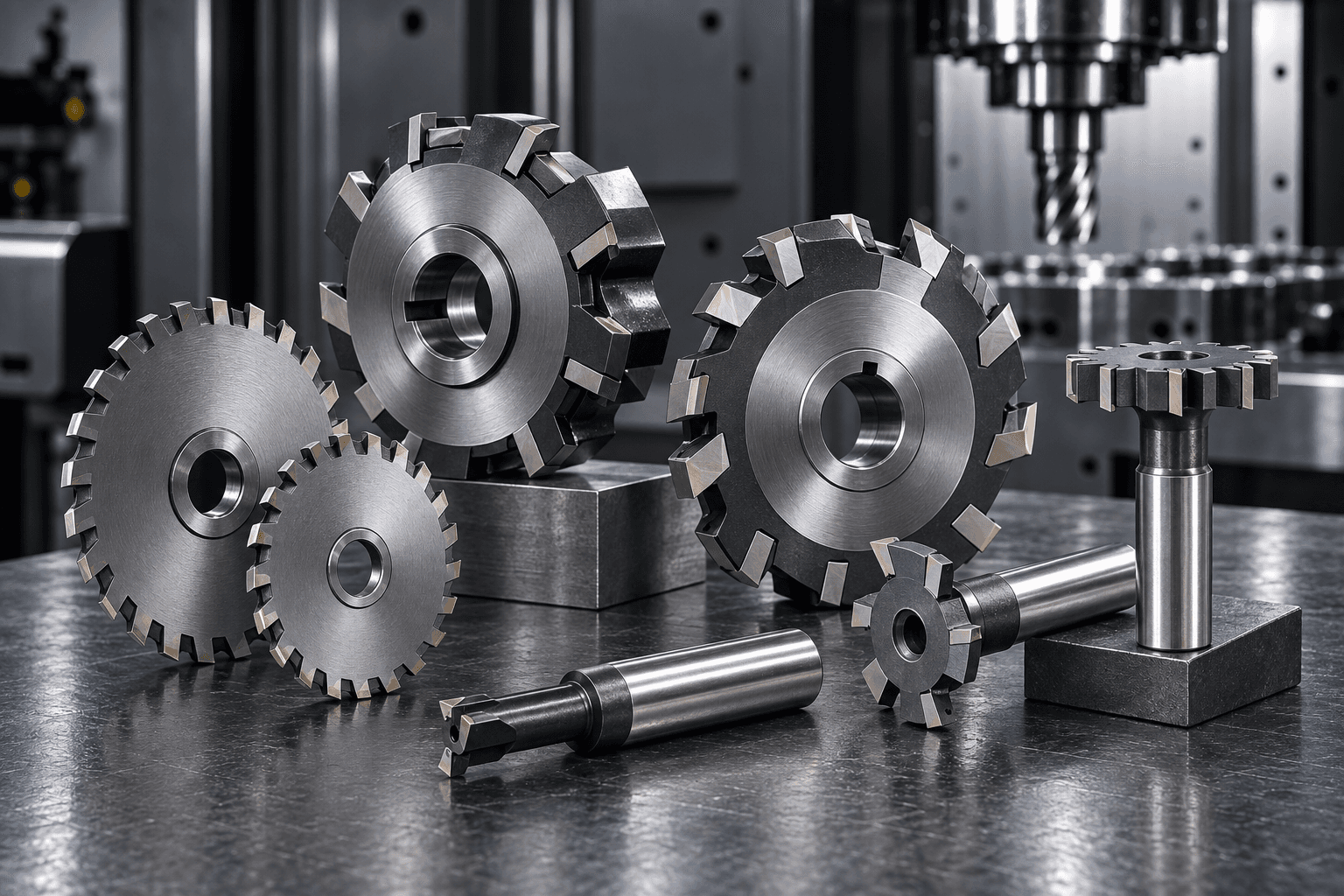
Requests may involve shank-mounted cutters, disc-style slotting tools or indexable groove-milling assemblies. Provide the cutter diameter and width, shank or arbor interface and complete body or cutting-head code. If ordering a replaceable head or insert, identify its parent assembly; similar dimensions alone do not establish a compatible connection.
Describe reach and adjacent obstructions
Send the surrounding workpiece dimensions and holder information where access is restricted. The neck, arbor and cutter body need clearance as well as the cutting edge. State whether the tool is for a repeat operation or a new feature so the sourcing request can be assessed without assuming an existing process transfers unchanged.
Questions about your requirement
Is a groove cutter interchangeable with a standard end mill?
Not automatically. Width, reach, undercut access and required form may call for a different cutter. Compare the full feature and tool specifications.
Should I include the cutter width when asking for replacement inserts?
Yes, but also provide the cutter-body and insert codes. Width alone does not identify the seat, insert geometry or assembly compatibility.
Discuss a part or application
Send the full manufacturer part number or available specification, quantity and machine context. Identification, suitability and supply terms are assessed for the specific enquiry.
Send a tooling enquiry